
TRAINING
+ 7800 hours and more than 260 participants
What we are doing in 2023:
Autodesk Civil 3D – Technical training

The AUTODESK Civil 3D training was identified in a need to develop skills in the AUTODESK Civil 3D Software perspective of the Civil Engineering Teams of the BoP and Solar & Grid Business Units of CJR
Renewables, which were joined by teams from Green Venture.
It was developed by Claranet and designed to meet internal needs and taking into account the heterogeneous group, the program totaled 93 hours of training and a volume of 831 hours with 5 modules. Civil 3D supports various types of projects and components within the scope of civil
infrastructure, namely drainage, roads, civil structures, among other components and features useful for the diversity of projects at the engineering level of solar and wind farms.
PVSyst – Technical training

Since the development of photovoltaic projects is a critical area in the company’s core business, the PVSyst training was highly relevant training in leveraging skills in using one of the most complete and accurate software for designing photovoltaic system projects worldwide. Investing in this type of training allows our teams to develop know-how in skills and critical tools in the development of photovoltaic projects. This training was developed directly with PVSyst and was aimed at different teams, departments and regions and developed in 3 different groups for a total of 6 hours each and with a total training volume of 108 hours. On average, 6 employees participated in each group, 1 of which was aimed at NORAM market teams.
Engiprot – Technical Training
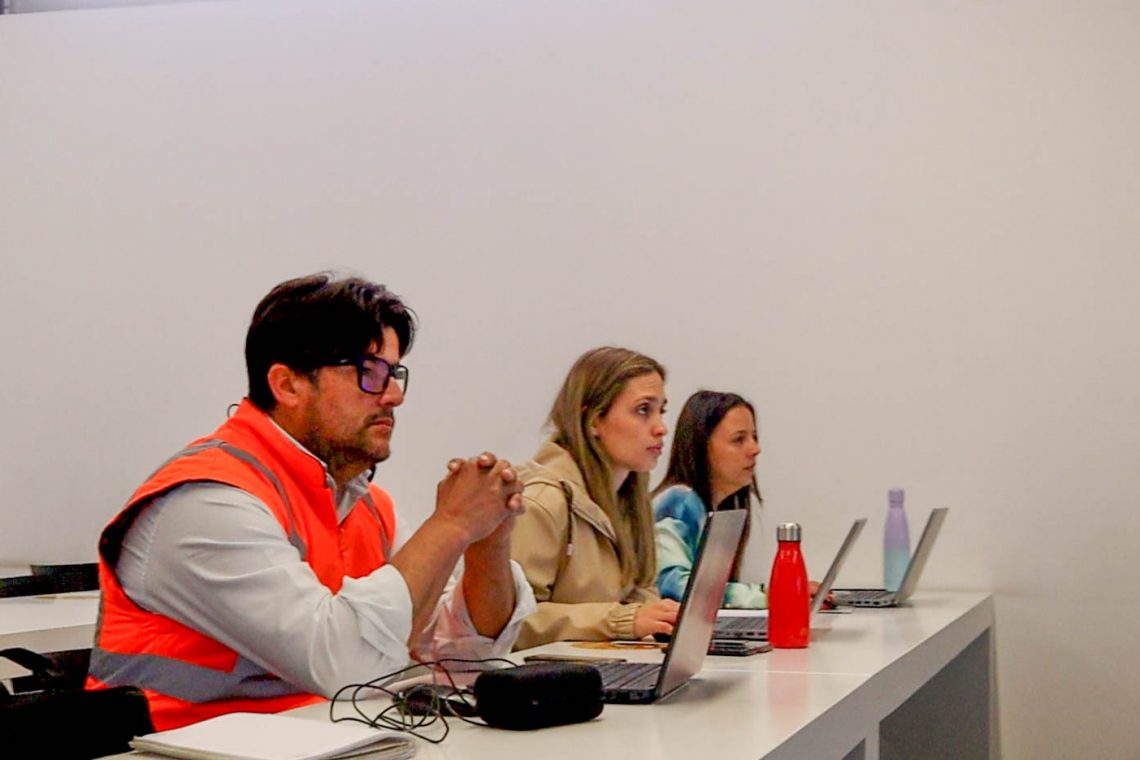
Still in the field of Engineering, a specialized program of Webinars was designed with Engiprot in the scope of Studies of Networks, Protection Systems, Energy, Electrical, Intensity and Differential Protections, with 4 Webinars having been held until April out of a total of 10 Webinars, each lasting 3
hours. This specific training allows the development of specialized know-how of a differentiated nature in the field of Electrical Engineering, namely Network Studies, Electrical Protection, among others. This know-how enables the application of knowledge and skills in the different projects of the Business Units, namely Solar & Grid and BoP of Engineering and Construction, and also of the Green Venture teams. So
far, 58 participations in these Webinars have been accounted for in an expected total of 181 expected
participations.
Spanish – Cross-training
Since the Latin American market is one of the main markets for project development, Spanish training
is one of the almost “mandatory” and continuous transversal training courses. It started in March and will last until August. There were two possible modalities, one of them more intensive, with online classes twice a week and another more self-taught and self-learning e-learning platform with group classes once a week, with a native teacher. Each modality, with more than 210 hours of training, totaled 36 employees, including expatriates in LATAM countries.
MS Excel – Cross-training
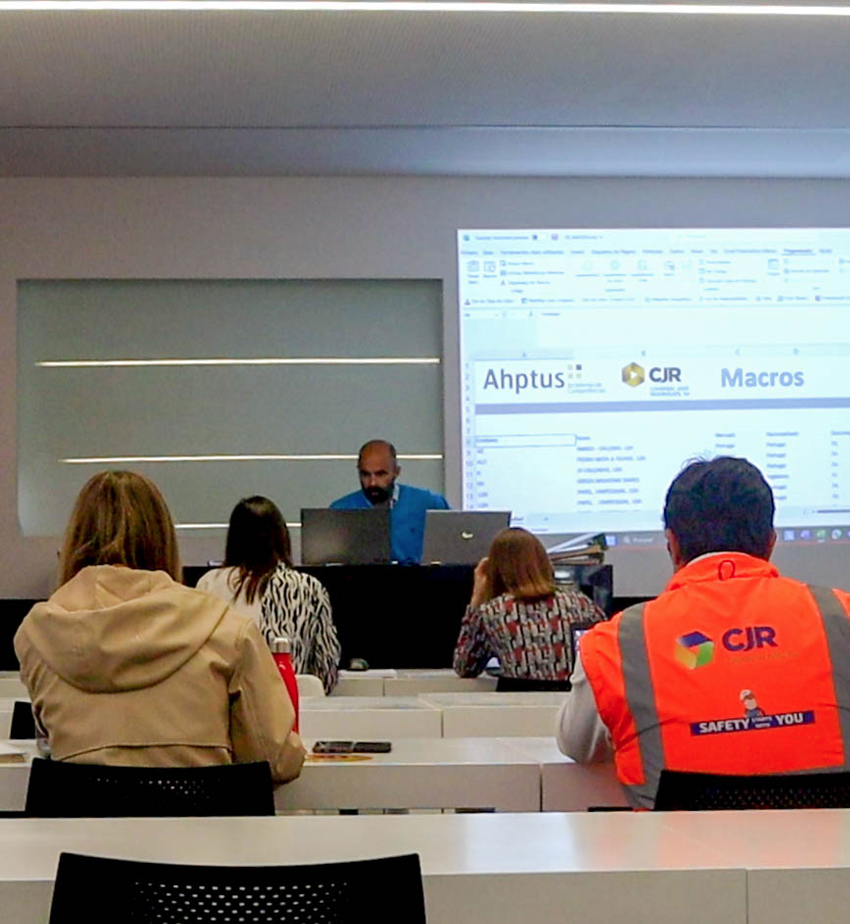
It took place in a face-to-face modality for 3 levels of knowledge with 20 hours each level. An average of 7 employees per group were integrated.
In MS Excel, we will also have 3 new classes in the 2nd semester in an online modality.
Business French – Cross-training

The latter is essentially aimed at employees and teams from business development areas, such as Business Development Management and Commercial Management. The relevance of this training is related to the entry of companies into new markets, which enables teams to develop and perfect levels of skills in different languages. It had 2 programs of 30 hours each, including the training of 3 employees.
SAP Internal Training – Cross- training

Continuous training in SAP Management ERP was provided by the Internal Team and aimed to optimize the use and management of processes in SAP. Ongoing training that enables the updating of knowledge and skills. It took place between March and April and totaled 6 groups with an average of 8 Employees per Group, with a duration of 6 hours each group. It was aimed mainly at project operational teams in the Site Assistant, Site Managers and Project Manager roles. Several employees from different geographies and markets were involved in this training, totaling 52 participants.
WTG Installation – Technical and mandatory training
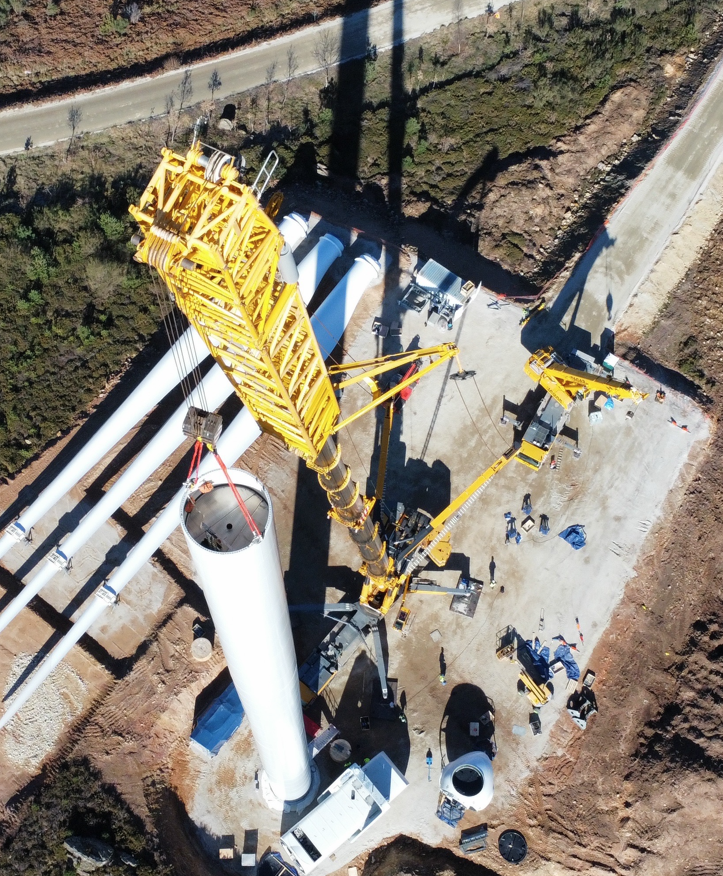
With a participation of more than 300 employees, with over 1500 hours, the WTG teams were trained in safety.
Opinion Article
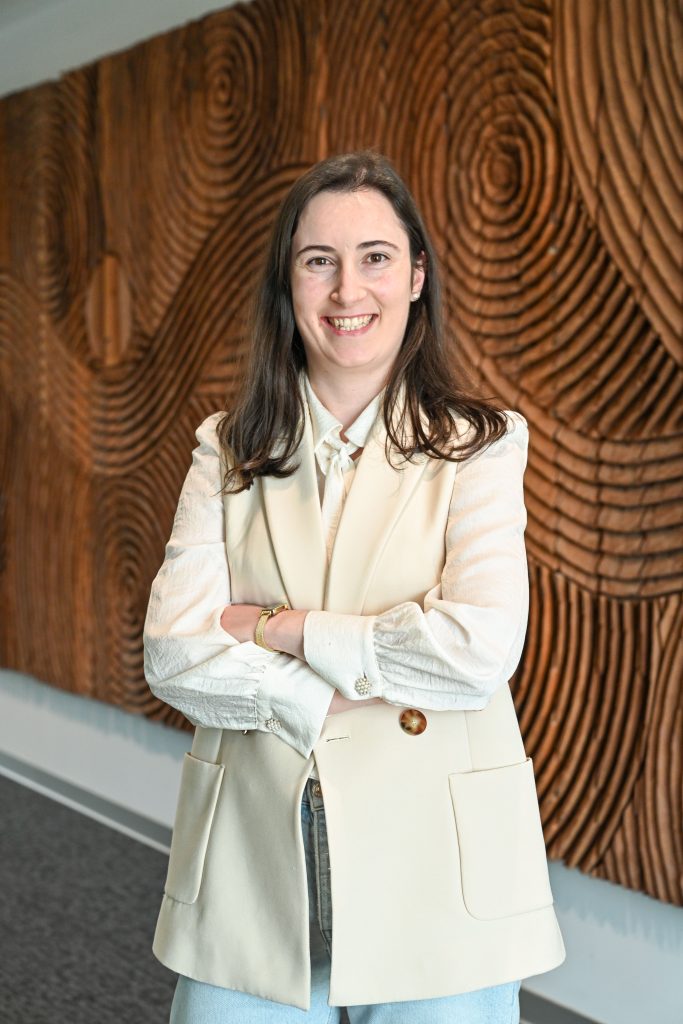
Talent Acquistion & Developement
Specialist
WHAT DO THE YOUNGEST COMPANY EMPLOYEES EXPECT?
Increasingly, on a daily basis, companies are faced with a new paradigm. How to recruit the best talent? How can companies reach them and attract them? This paradigm results not only from the different changes in the world of work, but also from the demands that Covid has brought and that has taught us all a new way of working. This meant that companies had to adapt to this new reality. We hear more and more about the shortage of workers. There are, in fact, several studies that point to this, which, in turn, leads to the difficulty of hiring new employees and, consequently, to the need, on the part of companies, to adopt strategies to attract and retain the best talent.
How do they do it? Younger employees are looking for dynamic, innovative companies, sustainable companies, companies that provide a balance between family life and work and a good working environment. This new generation (with Covid) has learned to study in e-learning and is looking for companies that
promote labor flexibility, telework and hybrid work. Companies that opt for a constant disclosure/demonstration strategy of incentives, such as: flexibility, training and skills development. I believe that people are increasingly aligned by purposes, and the individual purpose has to be aligned with the purpose of the company to which they belong. If so, we will have happy, satisfied employees with a great sense of organizational belonging, which leads to greater retention of talent.
AND WHAT DO COMPANIES EXPECT FROM NEW MEMBERS?
Companies, in general, look for behavioral skills in new members – the so-called soft skills – such as
autonomy, adaptability to different cultures, innovation, versatility, resilience, dynamism and emotional intelligence. In general, young people who face and overcome daily adversities/difficulties with optimism and know how to deal with problems in a positive way, learn from mistakes, manage to propose new solutions, have a great ability to solve problems and easily adapt to new environments and circumstances. In addition to soft skills, professional skills, hard skills, are also very important, such as
technical and specific knowledge of the training area and work area and knowledge of languages and
computers. Of the soft skills listed, I highlight emotional intelligence, the ability to empathize with others, and correctly interpret the reactions and feelings, both of others, and the ability to manage your own emotions. It is a highly sought after feature, not least because it promotes teamwork. I dare to say in
my personal opinion that soft skills are more important and valuable than hard skills in companies and are more difficult to work on individually.